Tag: Strangles

  • Prevent the spread of Strangles

    Prevent the spread of Strangles

    If you find out that a horse on your farm has strangles, it is essential to keep it quarantined from the other horses to prevent the spread of Strangles.  This is part two of “My Horse has Strangles.”  I want to thank an anonymous person for their first-hand experience with strangles and all of the photos.  This is their story.

    Our Story

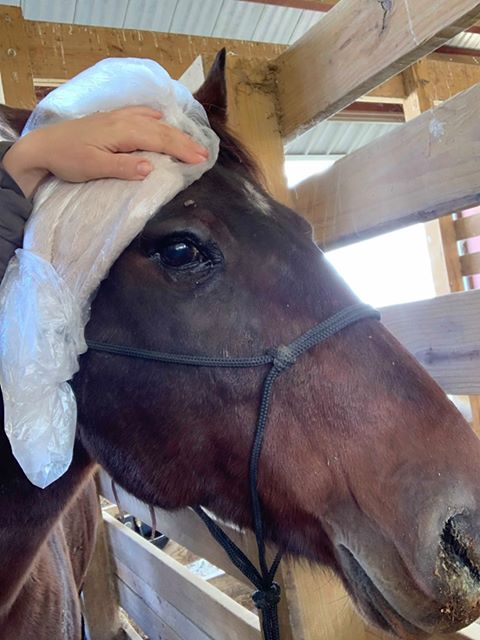
    Example 2:  Recently, a farm of forty-two horses came down with a strangles outbreak.  Thirty-four horses unofficially came down with strangles.  Six of the horses developed abscesses, and one horse had an autoimmune response.  I say unofficially as we only tested the first two with symptoms and quarantined any others that came down with any symptoms.  From our research, the bacteria can survive outside the host for up to 34 days in cold, wet, and humid conditions.  We have been closed from any horses entering or leaving for roughly three months, and that seems pretty standard from other equine professionals I spoke with.

    Most of the horses had a few days of copious amounts of snot, but they would have a thin dribble for the most part.  It would often look like they didn’t have any or minimal snot or symptoms until after they ate.  Then they usually had much more significant amounts start flowing.  The buckskin is what we generally saw during the day or before eating with the occasional flow.

    Cleaning and Sanitization

    We did clean most water troughs and buckets almost daily as drinking also increased snot flow, and it would quickly discolor the water and leave large mucus clumps floating or sitting at the base of the trough.

    Prevent the spread of Strangles

    Horse 1

    I did not get any pictures of this access to its fullest.  This was after it drained on its own.  The dates go Nov 13, Nov 15, Nov 20, Nov 27. It burst on the 13th, scab began falling off on the 15, and after cleaning, looked like ground beef.  We did end up cutting the rest of the scab off to encourage drainage and prevent him from ripping it off.  Nov 20, cleaning every day is the second to last photo.  Nov 27 is the last photo I have of this special access.

    How did we get it?

    We do not know what horse brought it onto our property or if it was a person.  Our facility sees about 200 people a week.  We do lessons, trail rides, and some showing though none of our horses had been off the property in about six months.  We had just brought in 3 new horses, and they stayed in their quarantine area for about 20 days with no symptoms.  They were turned out with the other horses, who all run together on 60+ acres of pasture.

    Shortly after, two of our regular horses developed rapid symptoms.  Both had been on the property for more than two years.  The first one we thought was choking because she showed no signs the previous day and was blowing snot about halfway through her breakfast, making gurgling noises, trying to clear her throat, and refusing to finish eating.  These were pretty on par with the symptoms of other horses we had who had choked.  I took her to the vet; there was nothing to clear.

    While I was at the vet with that horse, a second one came in acting lethargic.  She was kept in for observation and started bubbling and foaming at the mouth.  Hauled her to the vet as well.  By the time she got there, she had some snot beginning to come from her nose.  The first horse did develop a small abscess; the second did not.

    Horse 2

    Of the three new horses we brought in, only one contracted strangles, and that was about two weeks after the first horse showed symptoms.

    Conclusion

    Each case of Strangles is unique, and each treatment plan is different.  Contact your vet to help you with your horse.  If you choose to have detailed documentation of your experience and want to share it, please let me know, and I will add it to Find My Horses for others to learn from and prevent the spread of Strangles.


    Follow DD Mini Farm on Facebook or YouTube.

  • My Horse has Strangles

    My Horse has Strangles

    My horse has strangles, what should I do?  Today I’m going to help you learn what to do to help your horse and to prevent the spread of this disease to other horses.

    I want to thank an anonymous person for helping me write this article.  This person has just had a strangles outbreak at their barn.  They supplied the photos and gave me information on what the farm did to help prevent the spread of this disease.

    What is Strangles?

    Strangles is a highly infectious and contagious disease of the lymph nodes along with an upper respiratory infection.  It is caused by a bacterium called Streptococcus equi subspecies equi (S. equi) and affects horses, donkeys, and mules. This highly contagious disease can be a real nightmare to a farm of susceptible horses.  Strangles is also called equine distemper; the infection typically begins 10 to 12 days after exposure. Yes, strangles has a terrible name and a worse reputation.

    Strangles is more common in young horses but can affect a horse of any age. Strangles is an infectious disease that is contracted from horse to horse through direct contacts, such as touching muzzles, environmental contamination, and shared equipment, such as feed buckets and bridles. This disease spreads rapidly, producing large outbreaks in herds not previously exposed or vaccinated. The infection is especially aggressive in populations of foals and young horses.

    Diagnosis

    Aside from observing the visible physical signs in diagnosis, a veterinarian will be able to confirm a strangles diagnosis by taking a swab from the back of the nasal cavity.

    Symptoms

    The horse experiences a high fever, appetite loss, depression, and enlargement of the lymph nodes between the jawbones. Many have thick, yellow pus draining from the nostrils. The disease’s descriptive name comes from the “strangling” noise produced as severely affected horses struggle to draw breaths into their obstructed airways.  Sometimes horses do die from the struggle to breathe.

    Signs can last for a few weeks to a few months. Abscesses usually rupture and drain within two or three weeks. When abscesses burst, thick yellow pus is discharged, and recovery is generally without incident.  Abscesses in the lymph nodes of the head and neck can cause coughing fits and difficulty swallowing.

    Treatment

    Immediate veterinary advice should be sought to alleviate the symptoms in individual horses, and to prevent its spread to other horses. Each case should be assessed and treated individually by a veterinarian, as clinical signs and the severity of the disease can vary between horses.

    Treatment for strangles varies case by case. Treatment typically includes penicillin, anti-inflammatory drugs, such as phenylbutazone and flunixin meglumine (Banamine), which are indicated to reduce fever and swelling.

    Affected horses should be isolated for six to eight weeks to prevent spread to other horses. Good biosecurity must also be observed when handling infected horses.

    Complications

    While most horses recover with supportive treatment, complications may occur in up to 20% of affected horses.  Complications are primarily from secondary pneumonia that takes hold in debilitated or immune-compromised animals. Abscesses may also form in other areas of the body, such as the abdomen, lungs, and brain. This is considered a chronic form of strangles called “bastard strangles,” which can have serious implications if the abscesses rupture. Horses develop this form of strangles when their immune systems are compromised or if the bacteria rapidly invade the body.  As these internal abscesses progress, they can’t be drained or adequately treated, and their rupture within the body cavity usually results in the horse’s death.

    Safety Protocols

    When you have a horse or several horses on a farm that have strangles but others that do not show signs, it is best to take extra care not to get the non-exposed horses exposed.

    Example 1: Star is away at a show and comes back to the farm and soon shows signs of strangles.  Star is put into a quarantine barn away from the other horses.  Star is cared for by a single person, and all other barn personnel is not allowed to go near the confined area.  The caregiver removes her shoes and put on rubber boots before entering the quarantined area to care for Star.  When she leaves, she then puts on her shoes.  This prevents her from tracking the bacteria to other parts of the farm.  Before the caregiver goes to see any other horses on the farm, she disinfects herself and showers, and changes clothing.

    When Star gets an abscess that bursts and making her exceptionally infectious, the stable dedicates one person to take care of Star and no other horses.  This prevents the bacteria from going to any other part of the farm.

    Example 2: Example two is about a farm of 42 horses and how they handled a case of thirty-four horses coming down with strangles. Since it is quite long and detailed I’ve created a second article just for that experience. This farm has been generous enough to provide the photos for the two articles.   Thank you very much.

    Most horses continue to shed S equi particles up to a month after recovery. Three negative swabs, at intervals of 4–7 days, should be obtained before releasing your horse from quarantine.  If you choose not to do swabs, the minimum time of isolation should be between one month to six weeks.

    Vaccination against strangles provides excellent protection to horses. However, treatment alone should not be considered an absolute preventative due to differences between individual horses, the time since vaccination, and the level of challenge to immunity. Speak to your vet about the protocol.

    Conclusion

    In addition to vaccination, all newly introduced horses should be monitored closely for three weeks after arrival, and ideally quarantined from other horses during that period. Any horse that develops signs consistent with strangles should be isolated immediately and examined by a veterinarian to exclude the possibility of strangles.


    Follow DD Mini Farm on Facebook or YouTube.