Blog

  • What do I do when my horse dies?

    What do I do when my horse dies?

    What do I do when my horse dies?  This is a question that most people don’t want to think about.  But in reality, everyone should have a plan in place beforehand because trying to make those decisions when your heart hurts is very difficult.  While most owners consider their horse’s pets, your state may consider them farm animals.  The options for pets and livestock can vary, sometimes a considerable cost difference. What do I do when my horse dies?

    Horses are considered farm animals, and Tennessee considers farm animals as solid waste.  Dead livestock should be disposed of within 48 hours of death in one of the following manners.  If you have a high mortality rate of more than 10,000 lbs, you must contact the state veterinarian at (615) 837-5120.

    1. Burning
    2. Composting
    3. Incineration (Cremation)
    4. Landfill
    5. On-Farm Burial
    6. Pick Up Services

    Burning

    Section 1200-3-4-.04 of TDEC-Air Pollution Control Rules provides various exceptions to the general ban on open burning.  Specifically, Section 1200-3-4-.04(1)(f) allows for the burning of dead animals:

    “Fires solely for the burning of bodies of dead animals, including poultry, where no other safe and practical disposal method exists.  Priming materials used to facilitate such burning shall be limited to #1 or # 2-grade fuel oils, vegetation grown on the property of the burn site, and wood waste, as defined in the rule.”

    Most farms that use the Burning method are burning smaller livestock like Chickens and other small animals.  This is not an excellent way to dispose of your horse in Tennessee.

    This method of removal is inexpensive.

    Composting

    Composting large animals on your property are allowed. 

    The composting process will work best when the moisture content is 50% to 60% by weight (similar to a damp sponge with no free water present).  Water is added when the compost is turned.  In Tennessee, a permit is not required if the horse is composted where it lived.  For best results, wood chips are preferred over manure, stall waste, or straw.  Composting costs can be as low as $50 to $75 for those with access to free additive material.  I live in Rutherford County, Tennessee, and there is a free mulch plant nearby; if you choose to compost, check and see if there is one near you.

    The only equipment necessary is a front-end loader.  Composting may not be a viable option for those with small acreage farms, but it is convenient and inexpensive for those with access to a more massive acreage farm.  When your animal is euthanized using pentobarbital, there is potential for the drug to remain in the composted material.

    Here is a video of how the process is done (with a cow).

    This removal method is inexpensive, but you do have to move the animal into the compost pile.

    Incineration (Cremation)

    There are several cremation services in the Tennessee area.  Most only service small animals, but All-Tenn Horse and Pet Cremation will also take care of full-size horses.  I have used All-Tenn for several miniature horses, and my friend has had them take care of her full-size horse.  All-Tenn is amazing.  Unfortunately, I had to have a mini put down on Christmas afternoon.  I wasn’t even thinking, and I called them, and they came right over.  They are compassionate, professional, and courteous.  I really can’t say enough good things about them.

    You can call or text them at 615-828-7924.  They will come to pick up your horse and deliver the urn back at no extra charge.  The price I have paid for miniature horses and the amount my friend paid for her full-size horse are fair and not budget-breaking.  Below are the photos of the Urns I have returned with my horses.  (Yes, I have a fuzzy pet sitting on one of them).

    As you can see, these Urns are very lovely.  I highly recommend All-Tenn Cremation for its services.  The cost of this option is the most expensive of all the disposal options.  The plus side to this option is that you get to keep a part of your horse forever.

    Landfill

    In Tennessee, one of the options for disposal is using a landfill.  Not every landfill can take horses, and you must use a class 1 landfill for this service.  I will come back at a later date and add a list of landfills after I do more research.  Be sure to contact your landfill before showing up to make sure they accept horses.  Here is a list of current dumps in Tennessee.

    There are a few restrictions, even when using a landfill.

    1. Transfer the animal within 48 hours of death.
    2. Make sure the animal is completely secured and covered with a tarp.
    3. Call ahead and schedule drop-off for early in the morning.
    4. Have a disposable and sturdy rope tied to the animal for easier offloading.

    The cost of taking your horse to a landfill is approximately $35 per ton, and this is also an affordable option for many people.

    The downfall of using this option is that you have to transport your horse to the facility and load and unload it onto a trailer.

    On-Farm Burial

    Burying significant animal mortalities can be a safe, inexpensive, and convenient disposal method, mainly if excavating equipment is owned, and acceptable burial sites are readily available.

    The following restrictions must be used to choose a burial location; in addition, it must be located well away from sensitive areas to protect them further as follows:

    • Three hundred feet from wellheads (150 feet if the burial site is down-gradient from the wellhead).
    • One hundred sixty-five feet from property lines (the burial site should be discretely located).
    • One hundred feet from surface water (wetlands, streams, and ponds).

    Consider landfilling or composting the carcass if an acceptable burial site can’t be found.

    Pick Up Services

    I have been lucky enough to live in a county that has a pick-up service.  All Around Underground, Inc currently does the service.  You can call them at 931-306-2014 to set up a pick-up.  If you would rather, you can email them at allaroundundergroundstock@gmail.com.  The phone is answered Mon-Fri from 6 am to 2 pm.

    The following counties in the state of Tennessee have a Pick-Up service available for free.

    • Bedford
    • Coffee
    • Franklin
    • Giles
    • Lawrence
    • Lincoln
    • Marshall
    • Maury
    • Moore
    • Rutherford

    Your animal must be within 25 feet of the roadway and must be ready to be picked up with the call made.  The program is through the South Central Tennessee Development District.

    The pick-up is done by a professional that considers your horse a loved one.  They have been very gentle and careful when picking up my horses (and llama) in the past.

    So to answer the question: What do I do when my horse dies?  Many options help you with your loss, and you must choose the best one for your situation.  I hope you do not have to use one of these options for a long time.  If you live in another state other than Tennessee, please use these options as a guideline to help you research your options in other states.


    Contact your University of Tennessee county Extension agent for more information on equine disposal options in Tennessee.
    Follow DD Mini Farm on Facebook or YouTube.

  • Why should you do a Pre Purchase Exam

    Why should you do a Pre Purchase Exam

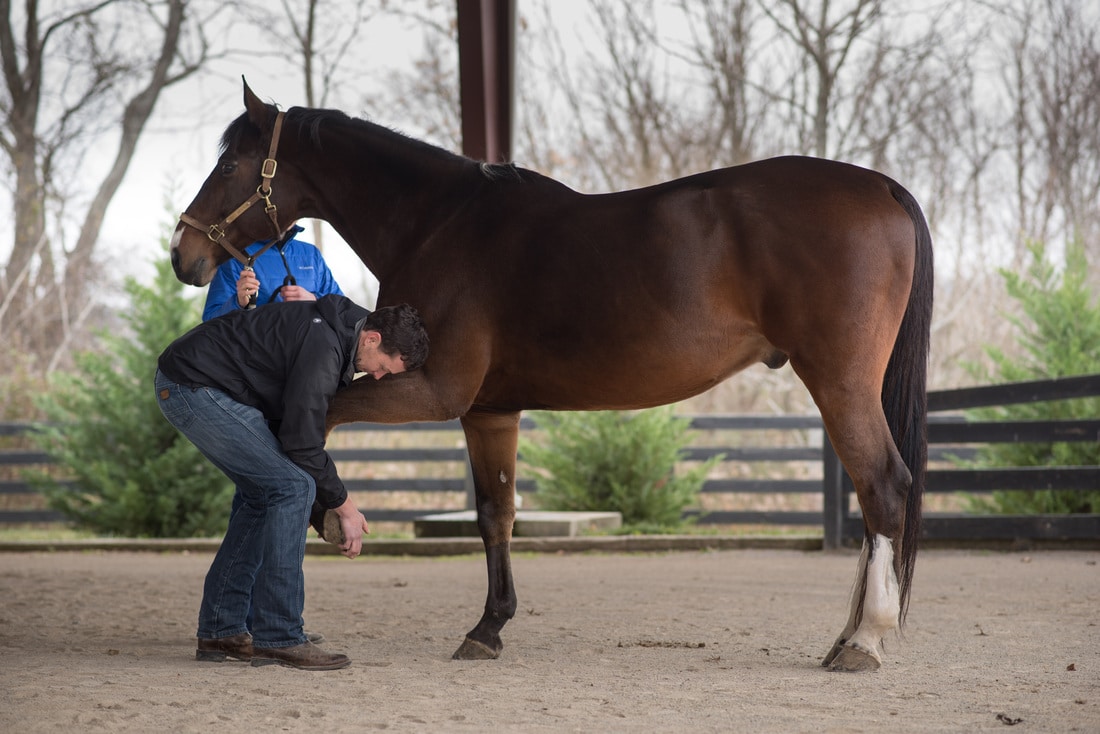
    Why should you do a Pre Purchase Exam?  Because you should make sure the horse you want to purchase can do the job you want it to do.

    When purchasing a horse, there are several things to look at, price, location, bloodlines, disposition, conformation, and of course, lameness.  Here are some suggestions of things to look for during your search.  Because every horse purchase and every visit to the same horse is a unique situation, use these ideas and suggestions as a guideline.   No rules are set in stone.

    Before you search for your next partner, you should figure out what you need a horse to do.  Will it be roping, sorting, hunter/jumper, pleasure riding, trail riding, competition trail, etc.?  What type of horse knowledge do you have?  What kind of training will your new horse need to have?  Will you do the training or have a trainer train it?

    Start the Search

    Now that you have narrowed down your type of horse, your price range, the location you are looking in, bloodlines, and how well trained your horse needs to be, start looking for your next horse.  There are several sites on the internet with horses for sale.  Start looking through different websites, talking to people, and looking at horses that meet your needs.

    Once you find the horse that meets your needs, set up an appointment to see the horse.

    A pre-purchase exam is still a brilliant idea even if you trust the person selling you a horse.  Sometimes the person selling the horse does not know the horse and may have an issue.  Sometimes the sellers know about the injury but don’t think it will affect the “job” you want the horse to do.  You can always ask the seller why they are selling the horse.

    Pre Purchase Exams are not just for lameness; a vet will check the horse’s overall health along with its teeth and other vitals.  The vet will let you know if this horse can do the job that you want it to do.

    Meet the horse

    Many people will tell you it is best to see the horse in person before purchasing.   In specific instances, primarily due to distance, people will buy a horse from someone far away and be happy.  Others will buy a horse, have it shipped to them, and find out that they can’t get along with the horse’s personality.  Some realize the horse has not had the training the way it was claimed to be.  Or even to find out that the horse is lame.

    Go and visit the horse; watch the owner or trainer ride the horse first to see how the horse reacts with people and riders that the horse typically works with.  If you have a trainer or an experienced horse person, let them ride the horse before you.  Of course, you must ride the horse before deciding if this could be your next horse.

    If you think that this is your next horse, try to spend some time with the horse and watch it interact with people and other horses.  Find out if this horse has ground manners and how it gets along with other horses.  And how it will do in the type of stabling, you will have for your horse.  A person willing to sell their horse to a perfect new home will not mind you spending time with the horse.

    Will your new horse be out at pasture with other horses or in a stall and turned out in individual paddocks?  How does this horse-like being stalled if it is required to be in a stall?  Does this horse crib?  Does this horse weave?

    Pre Purchase Exam

    If your horse is ridden extensively for show or pleasure, it is best to have a pre- Purchase Exam.  The Pre Purchase Exam will determine if the horse can do the job you have intended for it to do.  The veterinarian is there for the buyer, not the seller.  It is best to make sure that the horse will be the horse you need it to be.  Many people don’t consider a Pre Purchase Exam on horses in the lower dollar value.  Here are two short stories about why even smaller dollar amounts of horses should have a Pre Purchase Exam.

    Photo Credit: Tennessee Equine Hospital
    Example 1

    When my parents purchased my first horse for me when I was twelve, we went and looked at several horses.  I rode many of them and fell in LOVE with a Palomino mare.  My parents purchased this horse for me.  Within a week of her arriving at our place, she was dead lame.

    After our vet looked at her, she had bowed tendons and her stifles locked.  She was on stall rest, and we tried several different treatments.  As it turned out, she could only have some light riding done after a YEAR off.  She was never able to compete like we intended her to do when we purchased her.  This experience is not what a twelve-year-old wanted for her first horse.  One that she couldn’t ride.  If my parents had done a Pre Purchase Exam, we would have known that she had been on a pain block of some sort.

    I read the second example on a Facebook group.  So I contacted the person to ask permission to use her words for this post.  I feel that this is another example of what could go wrong, and she has agreed to let me use her experience.

    Example 2

    My husband and I purchased a gelding last weekend after riding him in the round pen at the farm and discussing our plans with the horse to include a backup sorting horse for myself as well as a horse for my husband to sort on/trail ride with.

    We paid $1,200 and brought him home last Sunday.  He ran around in the paddock with the other horses that night and then showed lameness.  We separated the horse and called the vet out the next day.  She confirmed an old deep digital flexor tendon injury and advised that he not be ridden other than at the walk on trails and an occasional trot.  I was able to contact a previous owner (not the person we bought him from) as well as another additional owner, and both knew of the old injury causing soundness issues.

    We then took the horse to a second vet that specializes in sports medicine to get more imaging done as well as look into possible options for having this horse sound for showing.  The vet advised again that he should be a trail walk/occasional trot due to the old injury.  He did not feel the horse would be suitable for sorting.

    Yes, the horse didn’t show lameness until he ran in the paddock, but both vets indicate the lameness is because the horse has an old injury and not something that happened in our care.

    We have not previously considered pre-purchase vet checks on $1,200 horses, but I will guarantee this will be done before future horse purchases.

    The horse is fantastic, and it is incredibly disappointing that he will not be suitable for us.  It is even more depressing that we were not told about the injury during the purchase.

    Conclusion

    Don’t be in a rush to buy a horse.  Make sure it can do the job that you want it to do.  Don’t buy a horse for color only.  Get the opinion of a vet or farrier before you make that purchase.  If you feel the horse is for you, consider getting a Pre Purchase Exam with your vet.  The vet will check for lameness in addition to the overall health of the horse.

    If you have a story that you would like to add to this post, please send it in for consideration.

    Follow on Facebook or YouTube.

  • Horse Coat Patterns

    Horse Coat Patterns

    The following is a list of different horse coat patterns.  I’m going to start with the primary differences between the various paint patterns.

    Horse Coat Patterns

    Tobiano

    (pronounced: tow be yah’ no) This is the most common pattern, and the spots are usually oval or round patterns that extend down over the neck and chest, giving the appearance of a shield. Most horses have white legs below the knees and hocks with white across the back between the withers and the dock of the tail. Most of the time, the white is arranged in a roughly vertical pattern with more white than dark. The head is usually dark and with markings like that of a typical horse. i.e., star, snip, strip, or blaze.

    Photo examples: (click on photo to enlarge)

    Overo

    (pronounced: oh vair” oh) The head markings on the Overo is usually a full blaze or bald face. The true Overo will often have four dark legs, and the white markings on the body or neck will appear to be framed by contrasting coat colors. The white markings will not cross the back between the withers and the tail as a general rule. The tail will typically be one color. The Overo paint may be either predominately dark or white. Blue eyes are familiar in the Overo color pattern.

      • Frame Overo: The most familiar overo pattern is the frame color.  Visually identified frames have no health defects connected to their color. They are characterized by irregular, sharp white patches on the sides of the body, leaving a “frame” of non-white color that typically includes the top line.  Frame Overo Horses can be of solid coloring. Only Genetic Testing can prove a horse Positive or Negative for this color pattern. Testing is essential and not something to be guessed at, especially when breeding this color pattern.
      • Splash Overo: typically have blue eyes and crisp, smooth, blocky white markings that almost always include the head and legs. The tail is often white or white-tipped, and body markings originate under the belly and extend “upwards.” Horses can have just a little white marking or look like they have been dipped in White Paint.
      • Tovero: (pronounced: tow vair’ oh)(also known as Tobero (pronounced: tow bair’ oh) ) spotting pattern that is a mix of tobiano and overo coloration, such as blue eyes on a dark head.

    Photo examples: (click on photo to enlarge)

    Sabino

    (pronounced: sa bee no) Often confused with roan, Sabino is a slight spotting pattern characterized by high white on legs, belly spots, white markings on the face extending past the eyes, and patches of roaning patterns standing alone or on the edges of white markings.

    Photo examples:  (click to enlarge)

    Conclusion

    After reading about the horse coat patterns, you should recognize them when you see a horse with these types of markings.

    If you would like to submit photos of your horses to be on the website, don’t hesitate to get in touch with us.

    References: Animal Genetics and Wikipedia

    Follow us on Facebook or YouTube.

  • Bonnie and Bucky will be busy in December

    Bonnie and Bucky will be busy in December, and we would love for you to come to see us at one of our events.

    Bonnie and Bucky will be busy in December


    On December 1st at 3 pm, we will be at the Christmas Tree Lighting in Thompsons Station, TN.  Admission is FREE and open to the public.  The location is Sarah Benson Park across from the Tennessee Equine Hospital.

    https://springhillfresh.com/event/thompsons-station-tree-lighting/


    Then on Wednesday, December 11th, we will be at the Revolution Health Center in Murfreesboro for their Christmas Party.  If you are looking for a new Chiropractor, then please stop by and get more information.  We will be there from 3 pm to 6:30 pm.


    We will also be at the Dickens of Christmas Festival in Franklin, Tennessee on Saturday, December 14th, and Sunday, December 15th.

    The Heritage Foundation of Williamson County TN’s 35th Annual Dickens of a Christmas, Presented by First Citizens National Bank, is Middle Tennessee’s largest outdoor Christmas festival returning this year on December 14 and 15, 2019!

    I am looking for a volunteer to take care of our wheelbarrow and pitchfork.  You will be the cleanup service for Bonnie and Bucky.  I need someone both days.


    Follow us on Facebook or YouTube.

  • Upcoming Events

    I just wanted to let everyone know the upcoming events that DD Mini Farm will be participating in over the next two weekends.

    Miniature Horse Show

    Sunday, April 7th I will be taking DDMinis Majic’s Music Man to Shelbyville, TN for the Tennessee Miniature Horse Club show.  He will be shown by Megan Postaltheweight in several classes.  If you are in the area then please stop by and say hello.

    Megan will be showing M&M this year at several Miniature Horse Shows and taking him to the AMHA World Show in August 2019.  Here are some photos of Megan and M&M from last year.


    Brentwood 50th Anniversary Parade

    On Saturday, April 13th Duke and I will be participating in the Brentwood Golden Gallop Parade.

    I’ve been invited to participate in the Brentwood Anniversary Parade.  The Golden year is in need of a Palomino horse.  I just so happen to have one.  What makes this extra special is that I used to live in Brentwood.  I graduated from Brentwood High School in 1987.  Many of my classmates will also be walking in the parade because we all turn 50 this year.  This is an extra special event that I get to participate in because of the connections of turning 50 and having a horse of the proper color to celebrate with.

    Here is a photo that I took of Duke yesterday.


    Follow us on Facebook or YouTube.

  • What can you do with Miniature Horses?

    What can you do with Miniature Horses?

    Are you wondering what you can do with miniature horses?  Well, you can do many things with miniature horses.  You can use them as Therapy Horses and show them in Miniature Horse Shows.  Miniature horses are able to be trained to drive and pull a cart for pleasure, show, or parades.  Last and most important is enjoying them.

    Therapy Horses

    Miniature horses used for therapy issues are mostly smaller horses with people-friendly personalities.  Many horses are not skittish and can go into buildings without fear.  You must ensure your horse can meet the requirements of miniature horse therapy work.  Follow our YouTube series to ensure your horse will be happy being a miniature therapy horse.

    There are several miniature horse therapy organizations online that work across the United States.  Their primary focus is going to hospitals and nursing homes to visit needy people.

    Miniature Horse Shows

    There are two central Miniature Horse registries in the United States.  One is the American Miniature Horse Association (AMHA), and the other is the American Miniature Horse Registry (AMHR).  AMHA has miniature horses measuring up to 34,” and AMHR has two divisions and allows horses to go up to 38″.

    Most miniature horse shows are through one or the other registry.  To be able to participate in these shows, the miniature horse must be registered with the registry hosting the show.   If your horse is not registered, you can always choose a saddle club or an open horse show that allows miniatures.

    Driving

    Once a miniature horse becomes three years old, it can be taught to drive.  Driving horses is done for pleasure, parades, or you can show in driving classes at horse shows.  I suggest you find someone who knows how to train miniature horses.  I have seen horrible accidents with horses and carts when horses are not trained well.


    Enjoy Them

    These horses are fun to have around and enjoy.  They are a great way to have a horse without the space required for a giant horse.  The costs are still the same or similar to a large horse.  Miniature horses are great for kids to learn about horses.  They don’t feel scared about the size of the horse and can feel safe around them.

    Conclusion

    I hope this answers many questions about what you can do with Miniature Horses.  There are many ways to enjoy the company of your little horse.  I sometimes have horses for sale, and I also have friends that sell miniature horses.  Please contact me if you are looking for one, and I will do my best to help you find one.


    Follow us on Facebook or YouTube.

    DaNel Hicks participates in the Amazon Services LLC Associates Program, an affiliate advertising program designed to provide a means for sites to earn advertising fees by advertising and linking to Amazon.com.