Today I’m going to talk about Base Horse Coat Colors. I am not a genetics expert, and this article tries to help everyday horse owners understand their horses’ colors. DNA testing is the only 100% way to know your horse’s color. DNA testing is done by pulling mane or tail hairs out by the root and sending those hairs to a laboratory that does DNA testing.
The following are some of the testing centers in the United States.

Basic Colors
The base horse coat colors are red-based, black-based, or bay. A red-based horse is a chestnut or sorrel. In most genetics testing, Red is based on the lower case “e.” A sorrel or chestnut would be classified as “ee.” A black-based horse will be “EE” or “Ee.” An “EE” black horse is a pure black horse that will only produce black-based foals. An “Ee” black-based horse has a 50% chance of producing black foals and a 50% chance of generating red-based foals.
Bay Horses have black manes and tails, black lower legs, and black points on the tips of the ears. The Agouti gene is what makes a horse look bay and is considered a dominant color gene. A black-based horse only needs one copy of the Agouti gene to appear as the color bay. The Agouti Gene does not have any effect on a red-based horse. If a red-based horse has the Agouti Gene, the only way to know would be a DNA test. The Bay color is expressed when the Agouti gene is present. The Agouti Gene is on a DNA report as “aa” no Agouti found, AA as two copies of Agouti is found, or Aa for one copy of Agouti is found. A way to remember what the Agouti gene does is “it pulls all the black to the tips of the horse.”
Every other color combines these primary colors and a color modifying the gene.
Chestnut (ee)
A red horse without any black. Mane and tail are usually the same shade or lighter than the body coat. The following names are also used to describe the chestnut color. A Chestnut horse can carry the Agouti Gene, but it will not be seen on the horse as the Agouti Gene only affects a horse with Black pigments.
- Liver Chestnut: A very dark, almost brownish-red.
- Light Chestnut: A bright red coat with a pale mane and tail.
- Sorrel: The color of a new penny and sorrel is the most common shade of chestnut.
Friends have donated the following photos. Click each picture for a larger version.


Black (EE or Ee)
I think there are two types of black: the fading black and the non-fading black horse. The fading black horses will turn a brownish or reddish color when exposed to lots of sunlight. Non-fading black horses do not fade in the sunshine and are more of a blue-black color. At this time, there is no way to determine the difference between the two with DNA testing. What I call a pure black horse is a horse that will DNA test EE. The Ee horse has one copy of the red gene; when the sun hits the coat, it will fade to a reddish-brown.
Most black foals are born a mousy grey color. As they grow and their foal coats shed, the darker black color will appear. Some foals are born jet black.
Friends have donated the following photos. Click each picture for a larger version.


Bay (EE or Ee) and (AA or Aa)
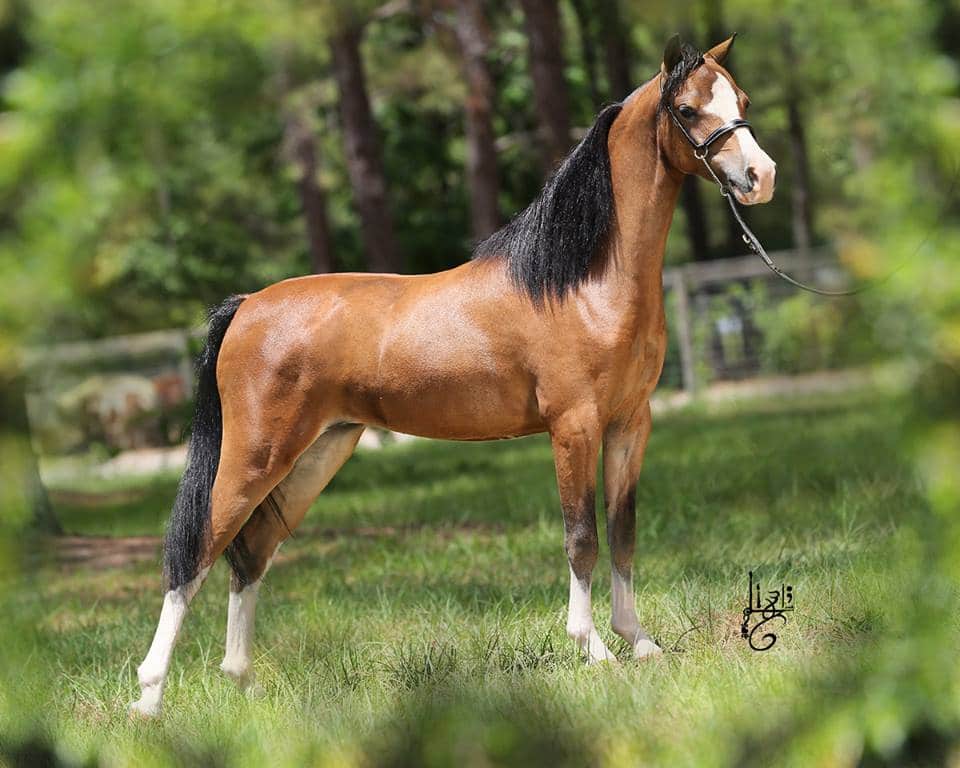
The body color of a Bay horse ranges from a light reddish-brown to a very dark brown or almost black. Bay horses are bay due to the Agouti Gene with the black base coat of a horse. The Agouti Gene pulls the black to the “Points” of the horse. (ears, legs, mane, and tail) The beautiful bay horse is one of the most common coat colors in horses. The DNA results will look like the following for a bay horse. (EE or Ee) And (AA or Aa). The following terms can also be heard when talking about bay horses.
- Black Bay: A very dark horse that can be almost black. Sometimes you can only tell these horses are bay and not black when the black fades in the sunlight. You can also see chestnut hairs around the muzzle or eyes.
- Blood Bay: a bright red color.
Friends have donated the following photos. Click each picture for a larger version.


Each color can have different shades that are lighter or darker. Most horses have two distinct colors. Their summer color and their winter color. Also, some horses are born one color but change to another color the older they get.
Other Colors
Now you may ask, “What about the REST of the colors?”. Well, the rest of the colors are different color modifiers that, when applied to the base color of the horse, will change the color to something else. Follow Find My Horses to read more about other colors soon.
References: Animal Genetics and Wikipedia